
It is not a key date, and not even a semi-key date. The 1939 Wheat penny value in circulated condition usually stays close to face value. Still, this year draws attention. Why?
Because value does not always come from rarity alone. Strike quality, mint varieties, and high-grade examples can shift the picture. Let’s examine what really matters.
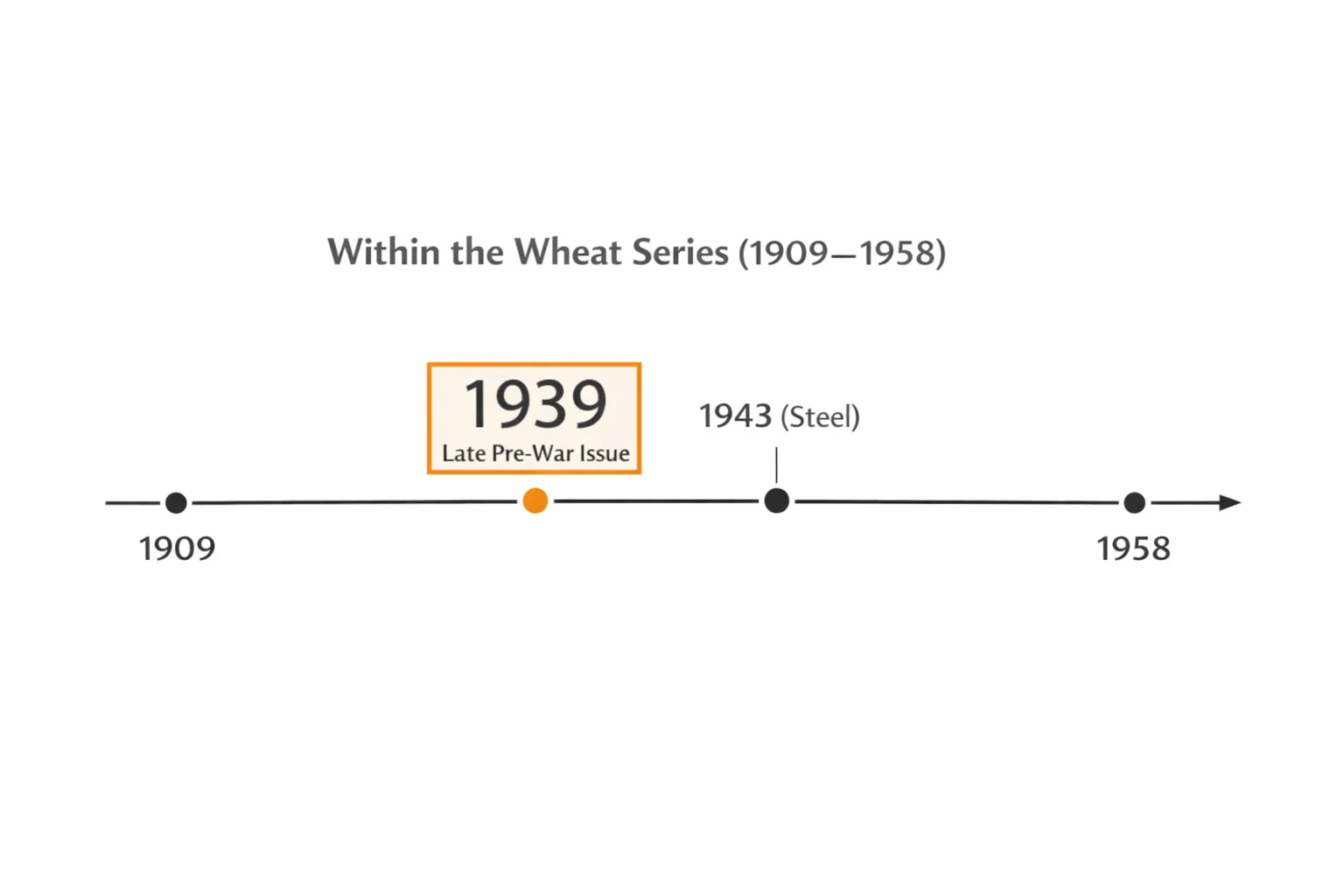
The 1939 Lincoln Wheat cent is a regular issue within the long-running Wheat series (1909–1958). It does not rank among low-mintage dates. It does not carry the scarcity associated with famous key coins.
Production was strong. Distribution was wide. Most surviving examples remain accessible.
When collectors evaluate the 1930s, they usually focus on earlier key years, e.g., 1909-S VDB, 1914-D, or 1931-S. In comparison, 1939 stands as a stable, common year. It fits comfortably within a full Wheat cent set without causing major budget losses.
This does not mean it lacks interest. It means the interest can appear based on specific factors.
1939 Wheat Cent Mintages (Approximate)
Mint | Mintage (approx.) |
1939 (Philadelphia) | ~316,000,000 |
1939-D | ~15,000,000 |
1939-S | ~52,000,000 |
Philadelphia produced the largest quantity. Denver struck fewer coins. San Francisco falls in between.
The lowest number belongs to 1939-D. However, 15 million pieces is not rare for the 1930s. It is lower than the Philadelphia issue, yet still well within the common range.
The 1939-S is also available. None of these figures pretends to be a key-date rare piece.
Original mintage numbers explain availability today. Circulated examples appear often, and even uncirculated pieces are available without extreme cost. Scarcity is not driven by the date, but shaped by grade and eye appeal.
1939 represents the final full year before the United States entered World War II. For some collectors, this gives the coin historical context.
Later war years introduced steel cents and alloy changes. The 1939 cent still reflects the standard copper composition of the classic pre-war period.
This does not create rarity. It adds historical positioning.
Late 1930s cents often show clear detail when preserved well. Lincoln’s hairlines remain defined. Wheat stalks are displayed and separated sharply. In Mint State, the design is balanced and attractive.
Collectors assembling Mint State Wheat sets often choose 1939 as an affordable example of pre-war strike quality.
Many dates from the 1910s and early 1920s become expensive in high Mint State grades. 1939 does not.
MS65 RD and MS66 RD examples are available. They reach premiums, but not extreme prices compared to key years.
For a collector building a complete high-grade set, 1939 becomes practical. It offers visual quality without disproportionate cost.
For this year, premiums appear more often in varieties than in the base date. Not every defect qualifies. Surface damage does not count, as the true value comes from production-related features like:
Doubled Die Obverse (DDO)
A true double die forms during die creation. It produces a second, clearly separated image on lettering or the date.
On 1939 cents, collectors examine LIBERTY, IN GOD WE TRUST, and the date for distinct doubling.
Important distinction: machine doubling is common and less valuable. It appears as a flat, shelf-like distortion rather than a clear separation.
When doubling is strong and visible without strain, demand increases.
Repunched Mint Mark (RPM)
RPM varieties occur when a mint mark is punched more than once into the die.
On 1939 coins, this concerns mint-marked pieces. Collectors look for secondary outlines or shadow impressions around the letter.
Clear RPMs attract interest. Minor shifts carry modest premiums.
“Woody” Alloy Effect
Some 1939 cents show streaked or wood-grain surfaces. This comes from alloy mixing variations.
The pattern may appear as linear tonal changes across the surface. It is not a damage. It reflects metal composition differences.
Premium depends on visibility and overall condition. Weak streaking may add to the value. Strong, attractive examples can get more attention.
Die Cracks and Breaks
Die cracks appear as raised lines on the coin. Later die states sometimes produce small breaks near the rim.
Strong, visually distinct examples draw moderate interest. Minor cracks are common and often ignored.
Off-Center and Striking Errors
Though not exclusive to 1939, off-center strikes can appear.
The greater the design shift, the stronger the premium. Small shifts add modest value. Dramatic displacement attracts collectors.
On open marketplaces, many 1939 varieties and visible errors appear in a broad range, often between $15 and $150.
The final price depends on:
Clarity of the variety
Grade and surface preservation
Color designation (BN, RB, RD)
Buyer confidence in attribution
Market timing
Listings vary widely. Asking prices do not equal realized prices. Condition still governs the outcome.
No. It is neither a key nor a semi-key date. Supply remains strong across all mints.
It has the lowest mintage of the year, but 15 million pieces is not scarce by Wheat cent standards.
Most circulated coins trade near face value. Light premiums may appear depending on eye appeal.
Yes. In Mint State, full red color on the penny reaches a stronger demand. BN examples sell for less than RD in comparable grades.
True doubled dies are collectible. Machine doubling is more common and less valuable.
Use good lighting, magnification, and a scale for weight confirmation. A coin scanner app can also assist with quick verification. Coin ID Scanner helps confirm type, provide technical specifications, and store coins digitally in a collection. It supports organization and reference. Final grading still requires careful visual inspection.
Not always. Premium depends on the strength of the pattern and overall preservation.
No. Many older cents are widely available. Date alone rarely defines price.
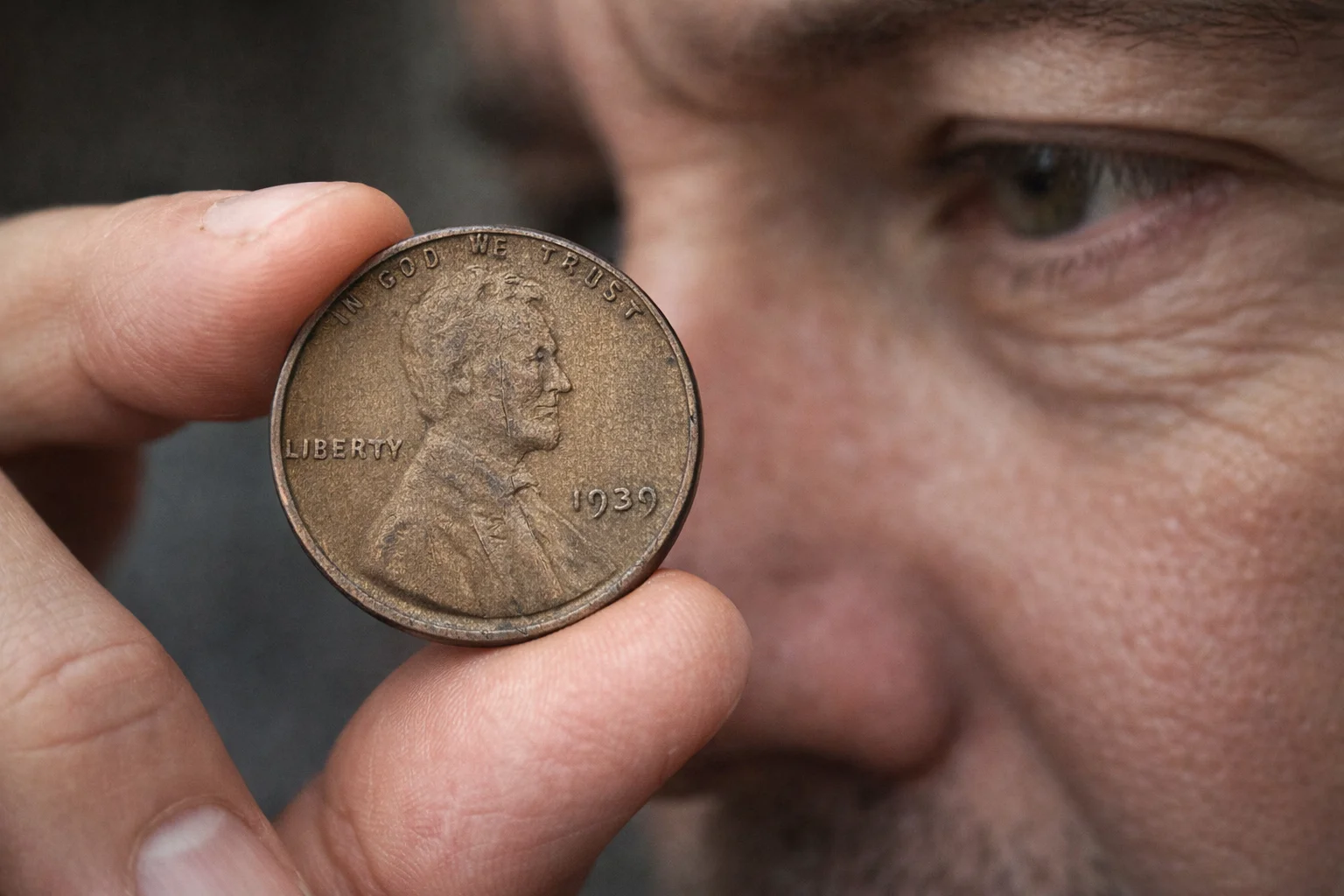
The answer remains clear. Not a key date. Not a semi-key. Most examples are common and circulated examples rarely reach high prices.
However, the coin:
Is a solid option for Mint State collectors
Have interesting doubled dies and RPM varieties
Is available in higher grades without extreme cost
Is a late pre-war issue within the Wheat series
Many lists of coins worth money include years without context. But actually, market behavior does not reward age alone. Preservation, originality, and verified varieties determine demand.
The 1939 Wheat cent shows how value forms in a stable, high-mintage copper coin. It may not headline auctions, but it remains relevant for collectors who understand condition and detail.

In the fast-paced world of pharmaceutical manufacturing, quality control is paramount to ensure the safety and efficacy of products. At our pharma company, we take great pride in our commitment to pro...

As a leading pharmaceutical company dedicated to producing high-quality products for the well-being of our customers, we prioritize customer-centric production practices. At our facility, we go above ...

In the world of pharmaceuticals, trust is paramount. Patients trust that the medications they are prescribed will help them recover from illnesses, doctors trust that the drugs they are prescribing ar...
Our Partners:
© 2026 QualityCare
All rights reserved.